
- HOW IT WORKS
-
FOR
INDIVISUALS
We offerWe serve
- FOR BUSINESSES
- WHY FORSEE SHIPPING
- BLOG
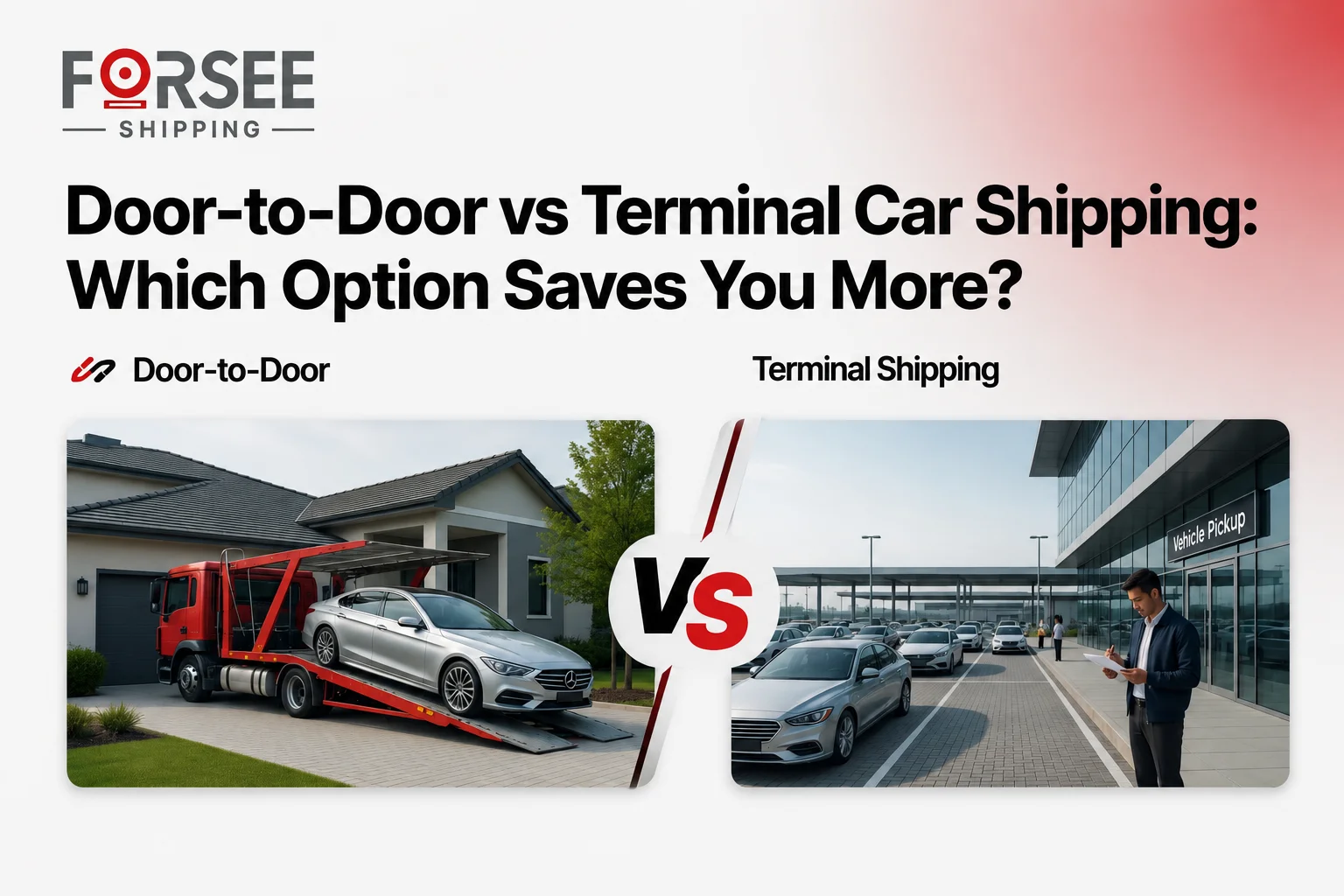
Moving a vehicle across states—or even across the country—can quickly become stressful when you’re comparing different vehicle transport options. Between pricing, convenience, delivery timelines, and safety concerns, choosing the right shipping method can directly impact both your budget and peace of mind.
Many customers struggle to decide between door-to-door transport and terminal shipping. While one offers convenience, the other may appear more affordable upfront. But which option actually saves you more in the long run?
In this guide, we’ll break down the pros, cons, costs, and practical differences between these two popular vehicle transport options so you can choose the best solution for your needs.
Before comparing costs and value, it’s important to understand how these two car shipping methods work.
Today, most customers choose door-to-door transport because it simplifies the shipping process and reduces the need for additional travel or coordination. As automobile shipping services have evolved, convenience has become one of the most important factors influencing customer decisions.
Door-to-door shipping is one of the most popular automobile shipping services available today. With this option, the carrier picks up your vehicle as close to your location as legally and safely possible and delivers it near your final destination.
You don’t need to drop off or collect the vehicle from a storage terminal. The transport company handles most of the logistics, making the process simpler and more convenient.
Terminal shipping requires you to drop off your vehicle at a designated storage facility or terminal. The vehicle is then transported to another terminal near the destination, where you or the recipient must pick it up.
This method was more common in the past but has become less popular as customers increasingly prioritize convenience.
Although terminal shipping can seem cheaper initially, hidden expenses often reduce the actual savings.
When evaluating vehicle transport options, the cheapest quote doesn’t always mean the best value.
| Feature | Door-to-Door Shipping | Terminal Shipping |
|---|---|---|
| Convenience | Very High | Moderate |
| Upfront Cost | Slightly Higher | Usually Lower |
| Hidden Costs | Minimal | Possible Storage & Travel Fees |
| Vehicle Handling | Less Frequent | More Frequent |
| Time Required | Lower | Higher |
| Best For | Busy Individuals & Families | Flexible Budget-Conscious Customers |
Door-to-door transport typically costs slightly more because of the personalized pickup and delivery service. However, the added convenience often offsets the difference.
You may save money indirectly through:
For many families and professionals, these hidden savings make door-to-door shipping more cost-effective overall.
Terminal transport may appear budget-friendly at first glance, but additional expenses can add up quickly.
Common extra costs include:
In many cases, customers discover the price gap between the two services is smaller than expected.
Convenience plays a major role when selecting vehicle transport options.
With door-to-door shipping:
This option is especially useful for:
Terminal shipping involves:
If your schedule changes unexpectedly, terminal storage charges may apply.
For customers who value flexibility and convenience, door-to-door service is often the better investment.
One overlooked factor in car shipping methods is vehicle handling frequency.
With door-to-door shipping, vehicles are usually loaded and unloaded fewer times. Reduced handling lowers the risk of:
Terminal shipping often involves multiple staging locations, increasing handling frequency and potential risks.
For cross-country shipping, door-to-door transport is generally preferred.
Most modern automobile shipping services now prioritize door-to-door transport because customers value convenience and efficiency over minimal upfront savings.
Despite its limitations, terminal shipping can still work in certain situations.
Terminal Shipping Is Best If:
However, it’s important to compare the total cost—not just the shipping quote.
When deciding between these vehicle transport options, ask yourself:
The right choice ultimately depends on your priorities, timeline, and overall budget.
No matter which shipping method you choose, these strategies can help reduce costs.
Book Early
Last-minute bookings often cost more. Scheduling early gives you access to better pricing and carrier availability.
Choose Open Transport
Open carriers are usually more affordable than enclosed transport options.
Be Flexible With Dates
Flexible pickup and delivery windows can help you secure lower rates.
Compare Multiple Quotes
Always compare pricing, reviews, and service details from several automobile shipping services before booking.
You can also explore our:
for more helpful insights.
Door-to-door car shipping may have a slightly higher upfront cost than terminal shipping, but it often saves money through reduced travel expenses, lower coordination costs, and greater convenience. For many customers, it provides better overall value.
Yes, terminal shipping services are still available, but they are less common than door-to-door transport. Most customers prefer direct pickup and delivery because it simplifies the shipping process.
Door-to-door car shipping is generally considered safer because vehicles are handled fewer times during transport. Reduced handling lowers the risk of minor damage, delays, or administrative errors.
Some terminals offer short-term vehicle storage, but storage fees may apply if the vehicle is not picked up within the designated timeframe. Policies vary by provider.
Door-to-door shipping is usually the most convenient vehicle transport option because the carrier handles pickup and delivery directly at or near your preferred locations.
Choosing between door-to-door and terminal shipping depends on your budget, schedule, and convenience preferences. While terminal shipping may offer lower upfront pricing, door-to-door service often provides better overall value through time savings, reduced hassle, and fewer hidden costs.
As you compare different vehicle transport options, focus on total value rather than just the initial quote. The right decision can save both money and stress during your vehicle relocation process.
Whether you’re comparing door-to-door car shipping and terminal shipping or exploring different vehicle transport options, choosing the right service can save both time and money.
At Forsee Shipping, we help customers find reliable, affordable vehicle transport solutions tailored to their schedule and budget.
Get a free car shipping quote today and discover the best shipping option for your vehicle.
