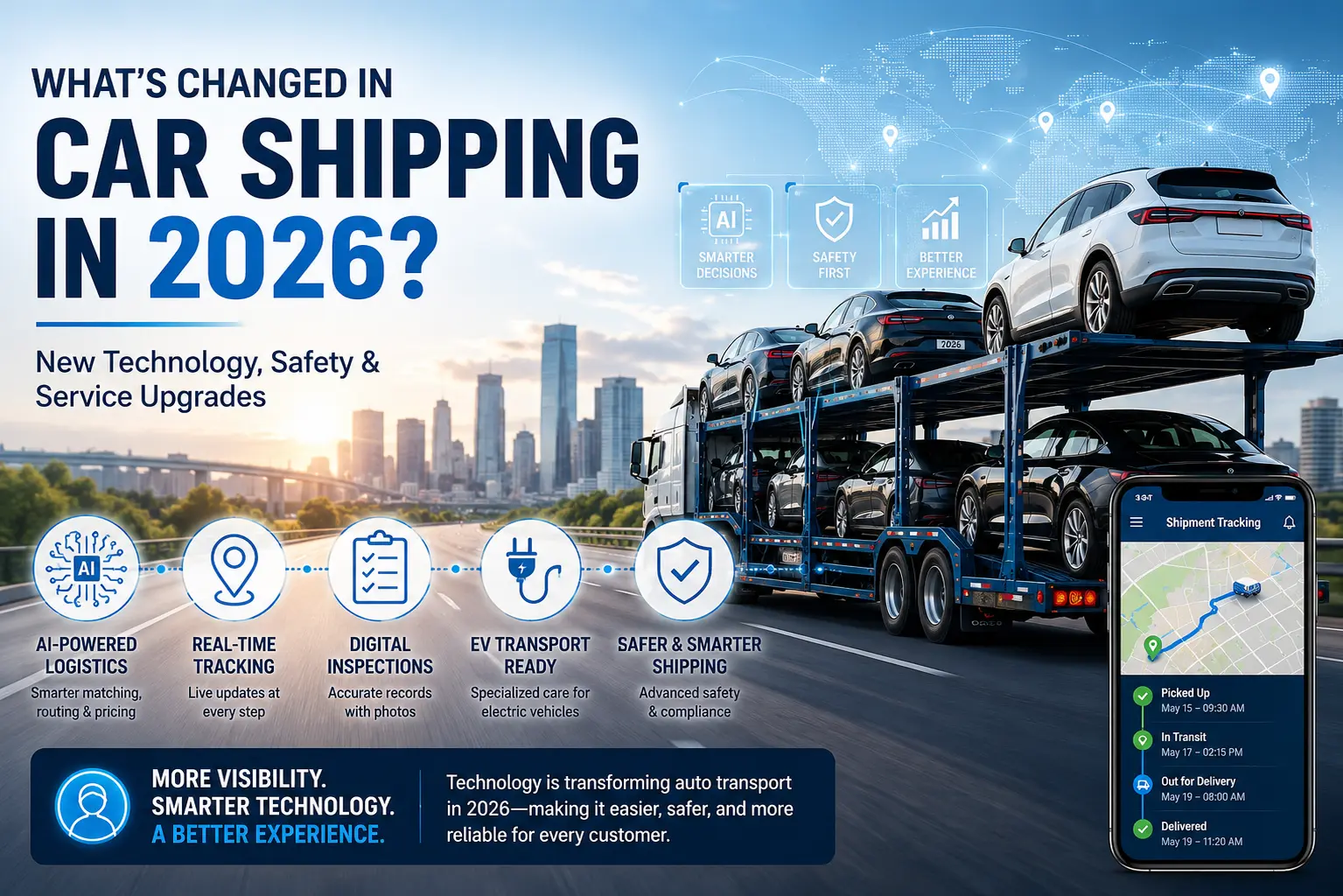
The auto transport industry is changing quickly in 2026. Customers who shipped a vehicle several years ago may notice that today’s car shipping experience is becoming more digital, transparent, and technology-driven.
From smarter carrier matching and automated scheduling to real-time tracking and improved vehicle information, technology is changing how transportation companies manage shipments. At the same time, the growing number of electric vehicles is creating new considerations for carriers, brokers, and customers.
For anyone planning to ship a car in 2026, understanding these changes can help make the process easier and more predictable.
1. AI Is Changing How Auto Transport Is Managed
One of the biggest developments in transportation is the growing use of artificial intelligence.
AI-powered systems can analyze information such as vehicle type, pickup location, delivery destination, carrier availability, route conditions, fuel costs, and scheduling requirements.
Instead of relying entirely on manual processes, transportation companies can use technology to identify suitable carriers and routes more efficiently.
This can potentially help improve:
- Carrier matching
- Route planning
- Scheduling
- Pricing analysis
- Shipment communication
- Delivery predictions
AI isn’t replacing the transportation professional. Instead, it can give brokers and logistics teams better information to make faster decisions.
Industry experts are already highlighting AI-powered carrier matching, dynamic pricing, and predictive scheduling as important developments in auto transport.
2. Real-Time Tracking Is Becoming More Important
Customers increasingly expect visibility after booking a transportation service.
In the past, vehicle owners often depended on phone calls or emails to find out where their vehicle was. Modern logistics technology makes it possible to provide more frequent shipment updates.
Real-time or near-real-time tracking can help customers understand:
- When their vehicle has been picked up
- Where the shipment is moving
- Whether the carrier is on schedule
- When delivery is approaching
This is especially valuable for long-distance transportation because customers don’t have to repeatedly contact the shipping company for basic updates.
For auto transport businesses, improved visibility can also help customer service teams identify potential delays earlier.
3. Digital Inspections Are Improving Documentation
Vehicle inspections are another area becoming increasingly digital.
Before transportation, the vehicle’s condition needs to be documented carefully. Traditionally, this involved paper forms and physical documentation.
Digital inspection systems can make it easier to record:
- Existing scratches
- Dents
- Paint damage
- Wheel condition
- Glass damage
- Interior condition
- Vehicle mileage
Photographs can also provide additional documentation.
This creates a clearer record of the vehicle’s condition before and after transportation.
For customers, good documentation provides additional peace of mind.
4. Electric Vehicles Are Changing Auto Transport
Electric vehicles are becoming a more important part of the transportation market.
EVs aren’t necessarily transported in a completely different way from conventional vehicles, but their batteries, weight, charging requirements, and safety considerations can affect transportation procedures.
Carriers may need to consider:
- Battery condition
- Vehicle weight
- State of charge
- Charging availability
- Proper loading procedures
- Manufacturer recommendations
As EV adoption grows, transportation companies need to understand how these vehicles should be handled safely.
The International Energy Agency’s 2026 Global EV Outlook also shows continued electrification across transportation, including significant growth in electric freight vehicles.
5. Customers Expect Faster Digital Communication
Another major change isn’t necessarily happening on the carrier itself—it’s happening in customer expectations.
People are accustomed to tracking packages, receiving automated notifications, completing forms online, and getting instant updates.
That expectation is now moving into vehicle transportation.
A modern car shipping experience increasingly involves:
Online quote → Digital booking → Confirmation → Pickup updates → Transportation → Delivery notification
The easier these steps are to understand, the more confidence customers can have in the process.
6. Safety and Vehicle Technology Are Getting More Attention
Modern vehicles contain more electronic systems than ever before.
Advanced driver-assistance systems, electronic door mechanisms, cameras, sensors, battery systems, and other technology mean transportation companies need to understand the vehicles they are handling.
Recent developments have also highlighted why vehicle technology and safety cannot be separated.
In August 2026, a major recall involving millions of vehicles in China raised concerns about concealed electronic door handles and emergency access during power failures or accidents.
While this issue isn’t directly an auto transport regulation, it demonstrates a broader industry reality: vehicle technology is becoming increasingly complex, and transportation professionals need to keep up.
7. What These Changes Mean for Customers
The biggest benefit of these upgrades is potentially a better customer experience.
Customers can expect the industry to continue moving toward:
- Better shipment visibility
- More digital communication
- Smarter scheduling
- More accurate information
- Improved documentation
- Greater attention to EV transportation
- More efficient logistics
However, technology doesn’t eliminate the importance of choosing a reliable transportation company.
Customers should still verify licensing, insurance, carrier information, reviews, and the terms of transportation before booking.
What Should You Look for When Shipping a Car in 2026?
When choosing an auto transport provider, consider whether the company offers:
- Clear pricing
- Transparent communication
- Shipment updates
- Proper vehicle inspection
- Licensed and insured transportation
- Experienced carrier coordination
- Support for your specific vehicle type
- A clear pickup and delivery process
Technology is useful, but trust and communication remain essential.
The Future of Car Shipping
Car shipping in 2026 is becoming more connected and technology-driven.
AI, digital documentation, improved tracking, and EV-focused transportation practices are changing the industry. Customers can expect transportation companies to continue adopting tools that make vehicle shipping more efficient and easier to understand.
For vehicle owners, the goal remains simple: get the vehicle from one location to another safely, efficiently, and with as little uncertainty as possible.
As technology continues to improve, the best auto transport companies will combine these digital upgrades with experienced logistics professionals and strong customer service.