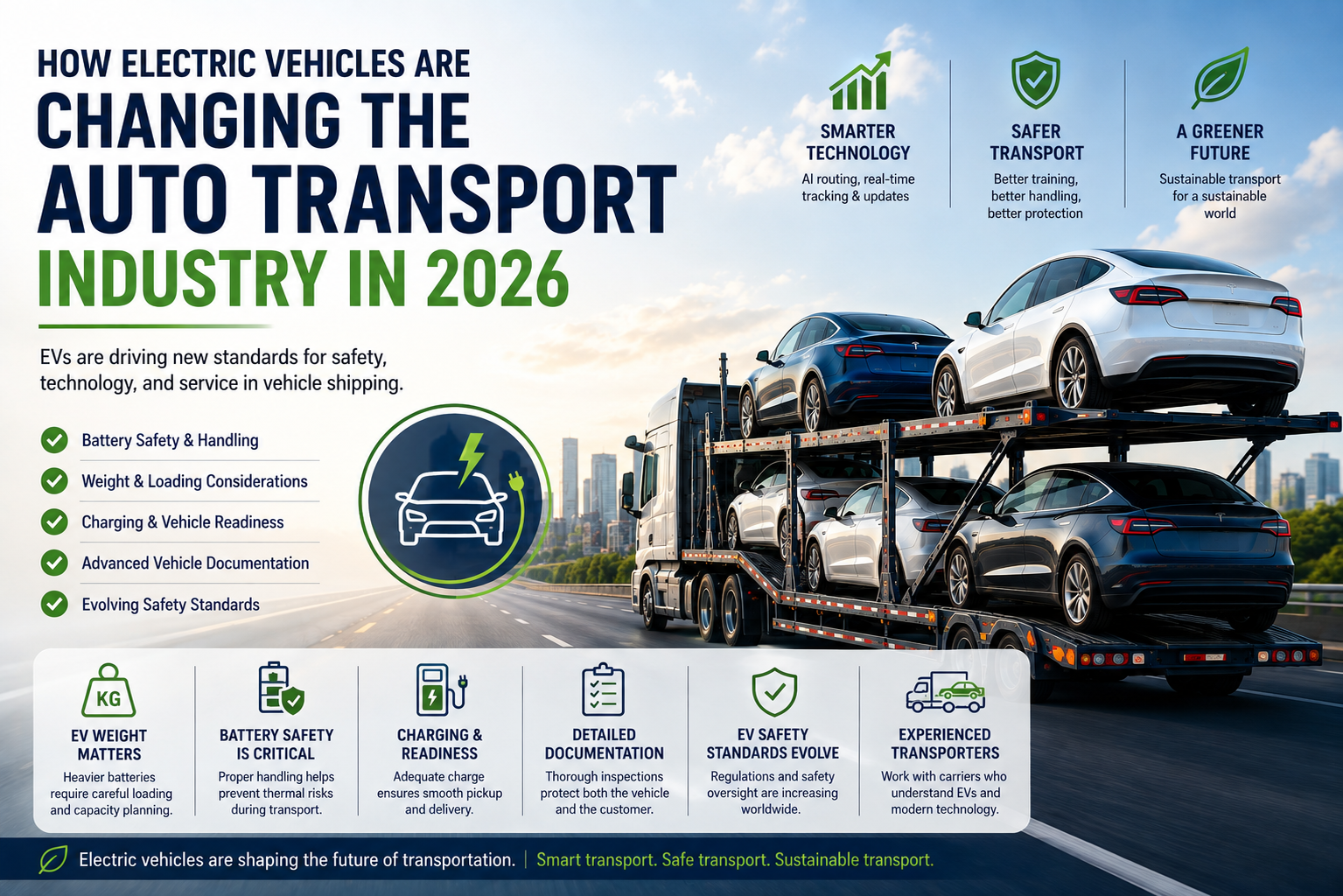
Electric vehicles are no longer a niche part of the automotive market. They are becoming an increasingly important part of the vehicles being purchased, sold, transported, and delivered across the country.
That growth is creating new considerations for the auto transport industry.
While shipping an electric vehicle isn’t fundamentally different from transporting a gasoline-powered vehicle, EVs introduce additional considerations involving battery systems, vehicle weight, charging, safety, and transportation procedures.
For customers planning to ship an EV in 2026, understanding these differences can make the process much easier.
EVs Are Becoming a Bigger Part of Transportation
The growth of electric mobility is extending beyond passenger vehicles.
According to the International Energy Agency’s 2026 Global EV Outlook, sales of electric heavy-duty freight trucks nearly tripled in 2025, reaching approximately 230,000 vehicles. Sales of electric medium freight trucks also increased significantly.
This matters because electrification isn’t limited to the vehicles being transported. Transportation fleets themselves are gradually becoming more electrified.
As the number of EVs increases, auto transport companies need to understand how to handle them safely and efficiently.
1. EV Weight Can Affect Transportation
One important difference is vehicle weight.
Large EVs can be heavier than comparable gasoline-powered vehicles because of their battery packs.
Weight matters in vehicle transportation because carriers operate within specific capacity limits.
Before transportation, the vehicle’s:
- Make and model
- Dimensions
- Weight
- Condition
- Mobility
may need to be considered when determining the appropriate carrier and loading process.
This is one reason customers should provide accurate vehicle information when requesting an auto transport quote.
2. Battery Safety Matters
The battery is the most important component that distinguishes an EV from a traditional vehicle.
Lithium-ion batteries require appropriate handling because damaged or overheated battery systems can present safety risks.
One important concern is thermal runaway—a chain reaction within battery cells that can lead to intense heat and potentially fire.
For this reason, carriers and logistics providers need procedures for identifying damaged vehicles and handling EVs appropriately.
Customers should inform their transportation provider if an EV has:
- Battery damage
- Accident damage
- Warning lights
- Charging problems
- Mechanical issues
- Fire or water damage
Providing this information before pickup helps the transportation provider plan appropriately.
3. EV Charging Can Affect Pickup and Delivery
Unlike gasoline vehicles, EVs need charging infrastructure.
Customers should generally make sure the vehicle has sufficient charge for loading, unloading, and necessary movement around pickup and delivery locations.
The exact requirements can vary depending on the carrier and vehicle.
For example, an EV may need to be moved a short distance at a delivery terminal or facility even after transportation is complete.
Planning ahead can prevent unnecessary complications.
4. Open vs. Enclosed EV Transport
EV owners may wonder whether they need enclosed transportation.
In many situations, an electric vehicle can be transported using standard open auto transport equipment.
However, enclosed transport may be attractive for:
- Luxury EVs
- High-value vehicles
- Performance EVs
- New vehicles
- Collector vehicles
- Customers seeking additional protection
The right choice depends on the vehicle and the customer’s priorities.
Open transport is generally the more common option, while enclosed transport provides additional protection from road debris and weather exposure.
5. EV Technology Requires Better Vehicle Documentation
Modern EVs contain sophisticated electronics and software.
Before transportation, documenting the vehicle’s condition is particularly important.
A professional inspection can record:
- Exterior condition
- Wheels and tires
- Glass
- Body panels
- Charging port
- Interior
- Existing damage
- Warning indicators
Photos can provide additional evidence.
This documentation can help both the customer and transportation company establish the vehicle’s condition before shipment.
6. EV Safety Regulations Are Evolving
Another major development is increasing regulatory attention toward EV safety.
Recent developments in China demonstrate how quickly EV safety requirements can evolve.
In August 2026, Chinese authorities announced a large vehicle recall involving approximately 4.3 million vehicles from nine automakers over concerns related to emergency door releases. Regulators are also increasing oversight of vehicle quality and advanced technologies.
Although these developments are not directly U.S. auto transport regulations, they demonstrate an important global trend:
As vehicles become more technologically advanced, safety standards are becoming more important.
7. What EV Owners Should Ask Before Shipping
Before booking EV transportation, ask:
- Does the carrier regularly transport EVs?
- Does the carrier have experience with my vehicle model?
- Does the vehicle need a specific charge level?
- How will the vehicle be loaded?
- What happens if the vehicle cannot move under its own power?
- Is the vehicle insured during transportation?
- How will existing damage be documented?
These questions can help customers identify potential issues before pickup.
The Future of EV Auto Transport
Electric vehicles are changing more than what people drive. They are changing how vehicles need to be transported, documented, inspected, and handled.
As EV adoption continues, auto transport companies will increasingly need specialized knowledge about battery systems, vehicle weight, charging, loading, and safety.
For customers, the most important step is choosing a transportation provider that understands modern vehicles and communicates clearly throughout the process.
EV transportation in 2026 isn’t simply about moving an electric car from Point A to Point B. It’s about understanding the technology inside the vehicle and ensuring that the transportation process accounts for it.